
Claude Opus 5
$5 / $25
Input $5 / MTok
Output $25 / MTok
Same as Opus 4.8. Model id: claude-opus-5
Available today · Official charts from Anthropic
Near Fable 5 intelligence at half the price — the new default on Claude Max, and the strongest model on Claude Pro.
In plain English
Skip the jargon. Here’s the launch in four short beats — who it’s for, what got better, what it costs, and how to try it today.
If you code, research, or automate work in Claude every day — this is the model Anthropic wants you on. Max users get it by default; Pro users get the strongest option in the plan.
Same list price ($5 in / $25 out per million tokens). On hard coding benches it more than doubles 4.8’s score at lower cost per task. Think: same bill, much better results.
Open Claude.ai / Claude Code and pick Opus 5 (or just use Max). Developers call claude-opus-5 on the API. Want speed? Fast mode is ~2.5× quicker at 2× token price.
Decide
Price, CursorBench (~0.5%), and when to pick which — one dedicated compare page.
Open the compare guide →Release
Claude Opus 5 shipped today on Claude.ai, Claude Code, Claude Cowork, and the Claude API. Anthropic positions it as an everyday model: more thorough at checking its own work, better at long multi-step jobs, and more efficient with tokens than older Opus models — without raising the Opus 4.8 price.
Benchmarks
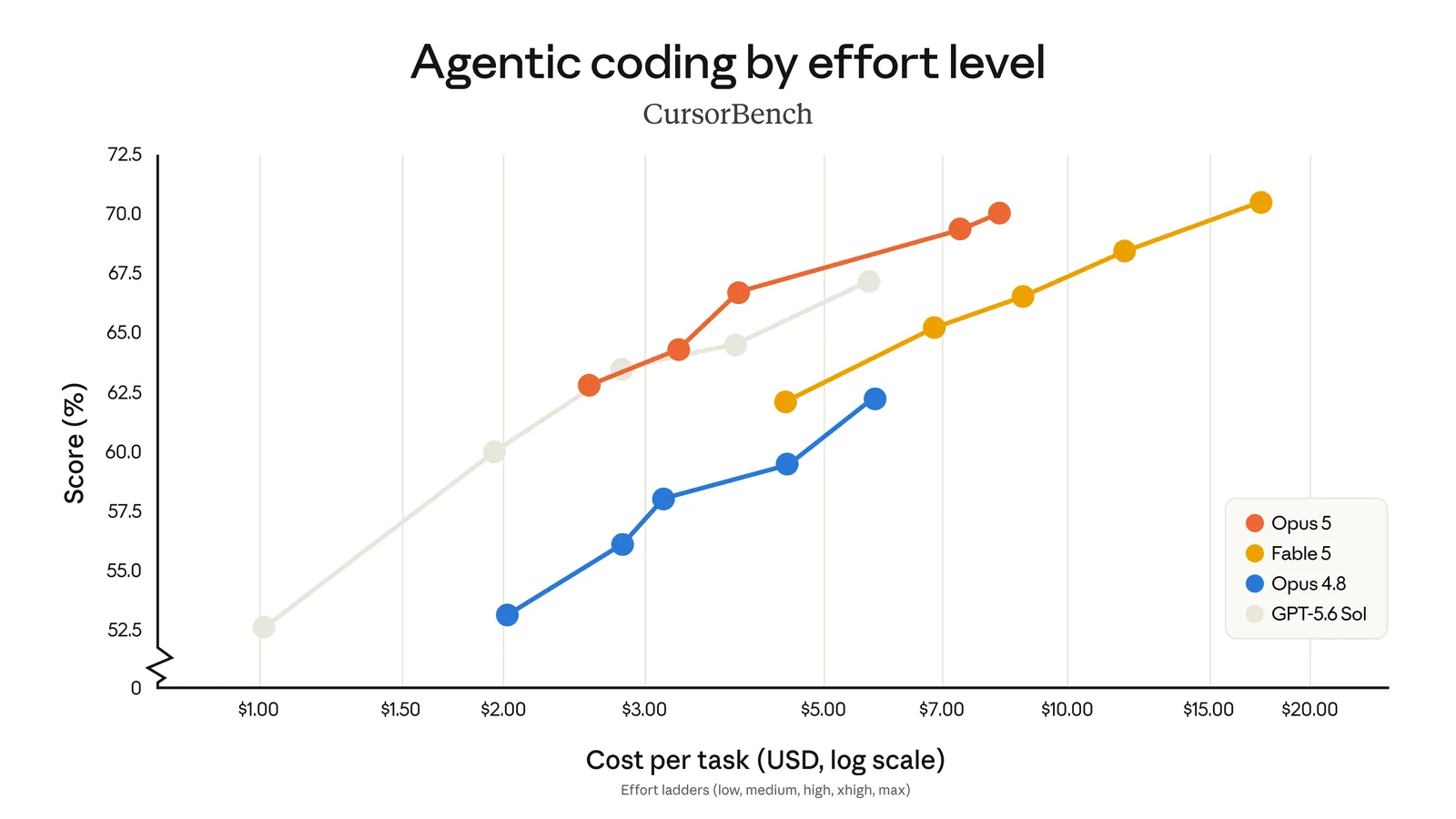
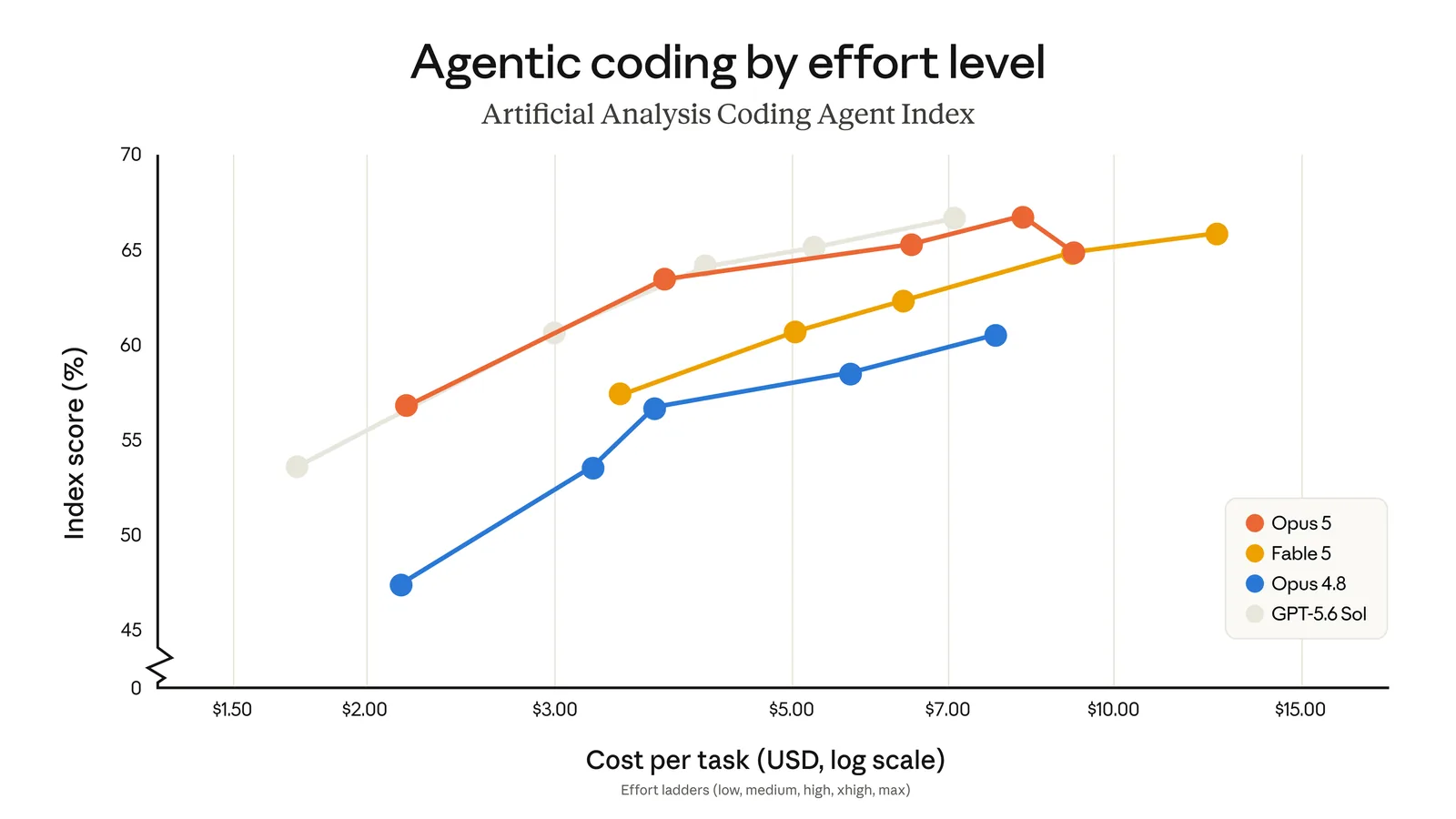
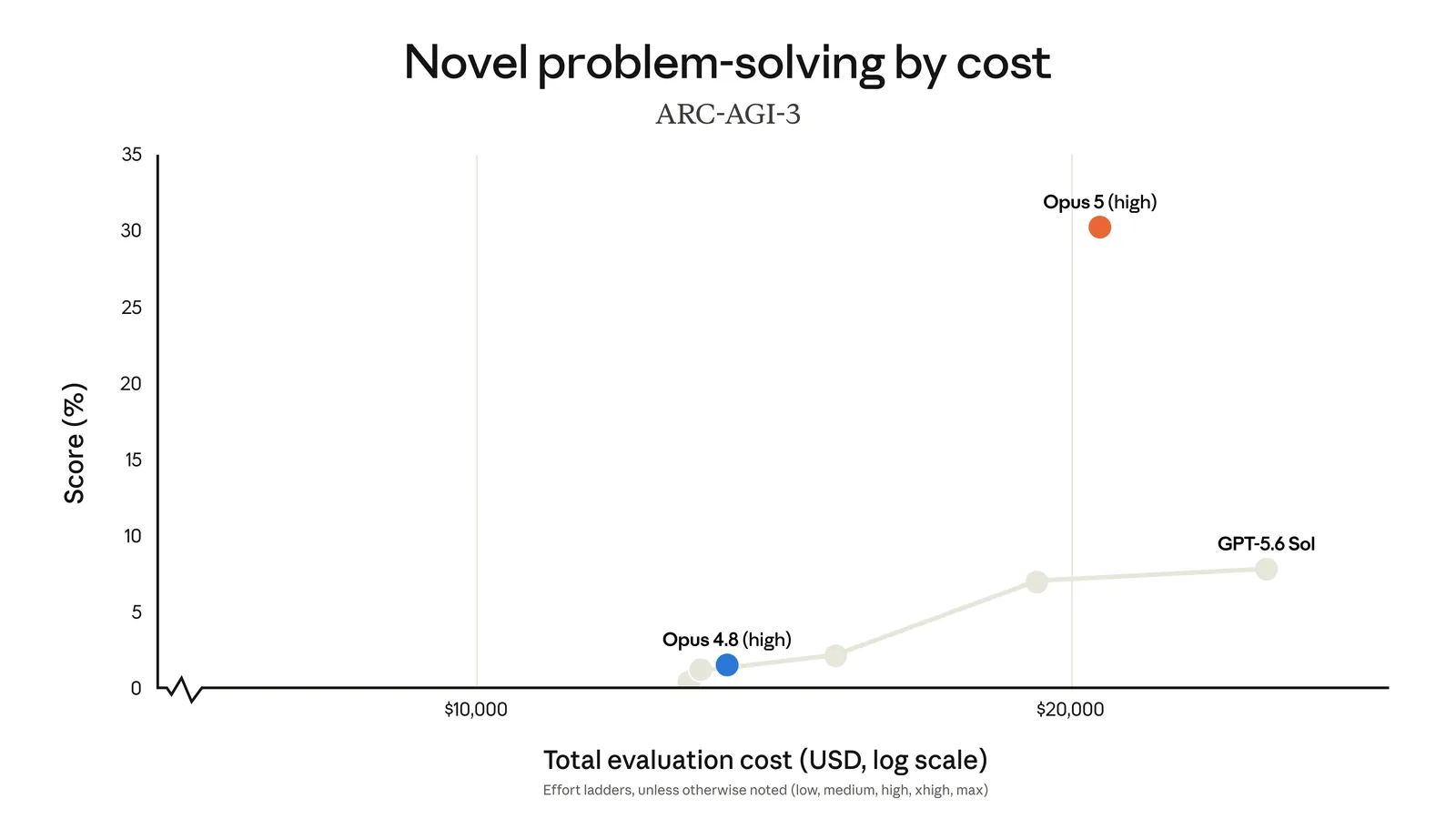
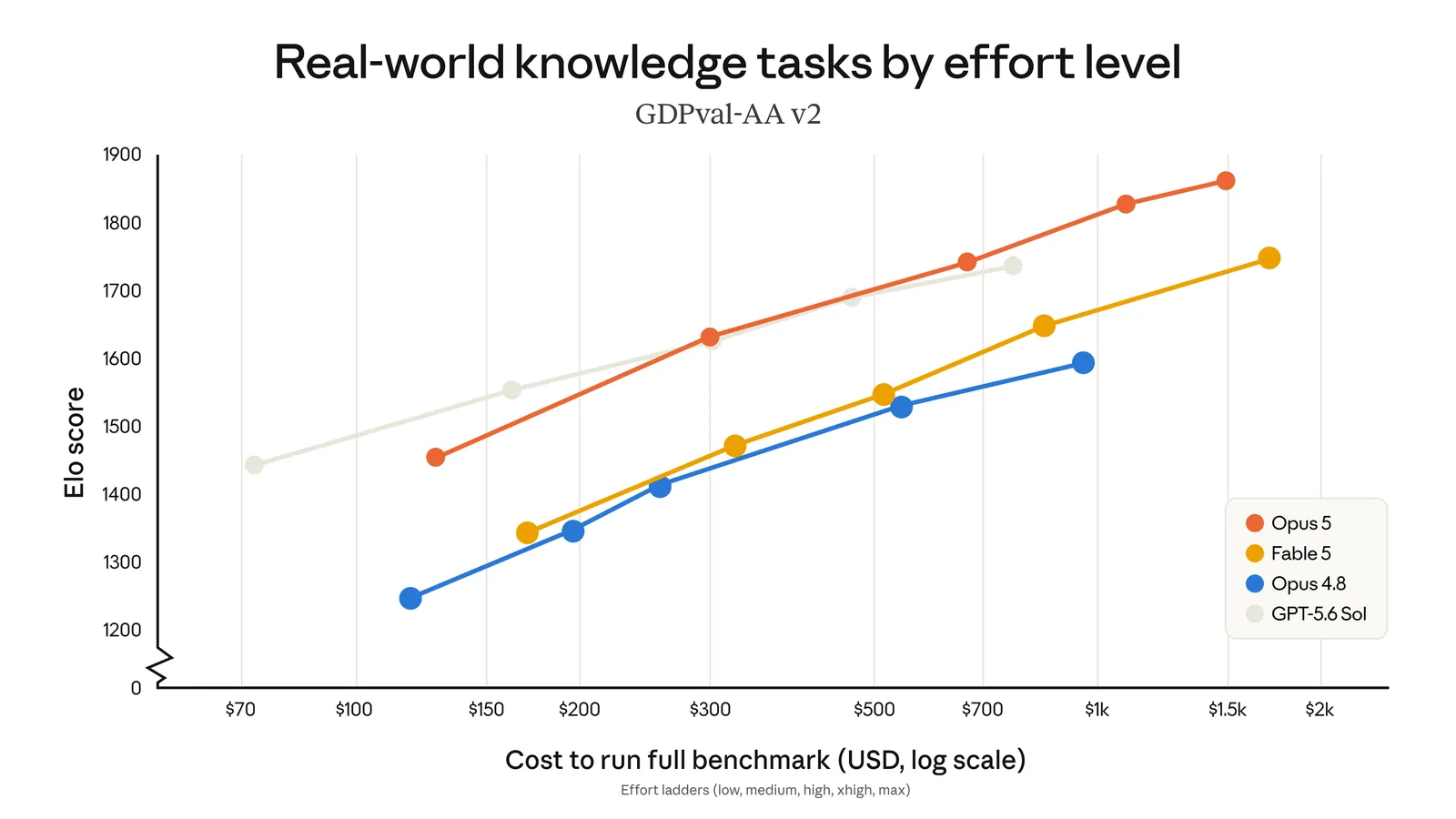
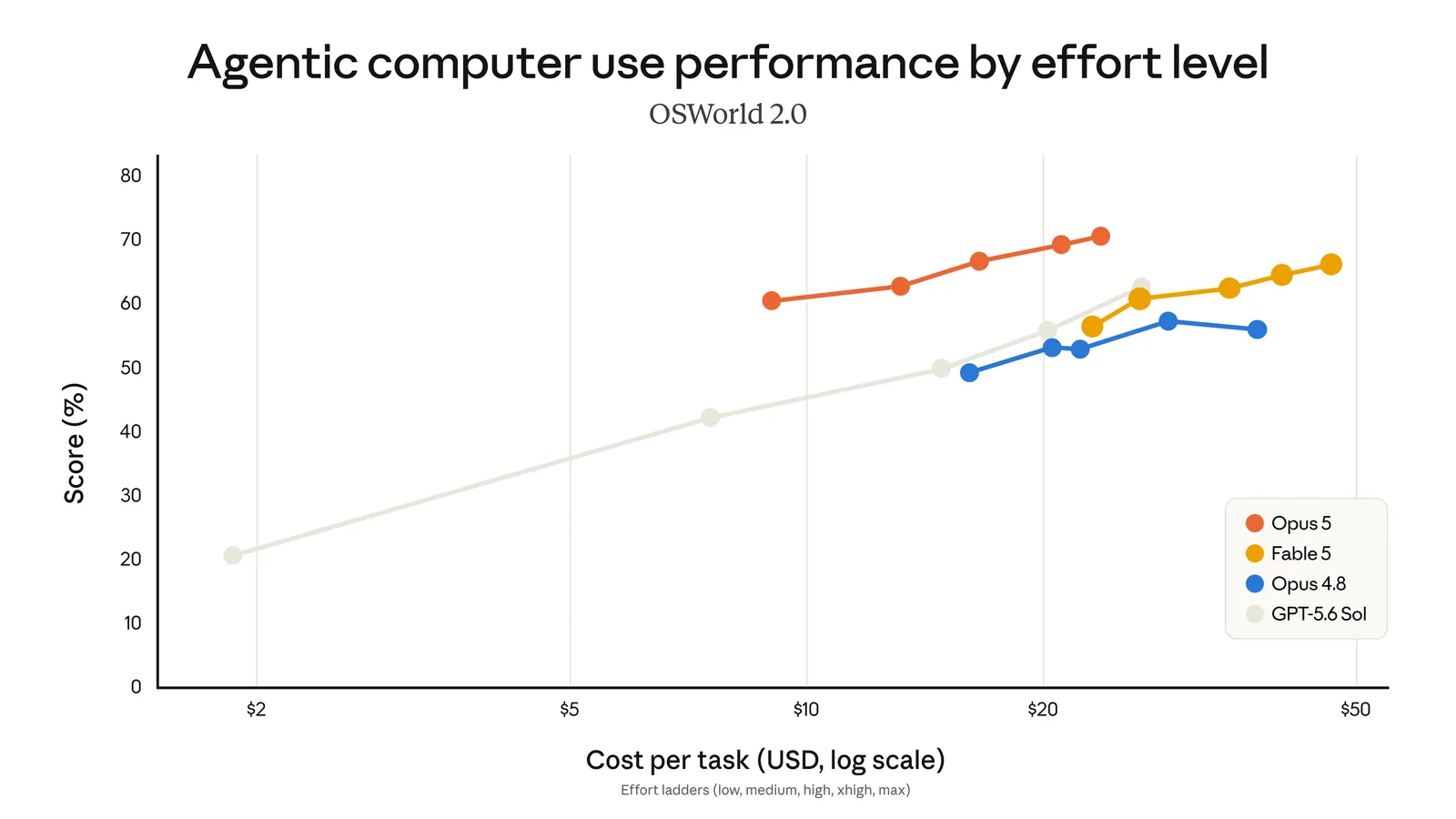
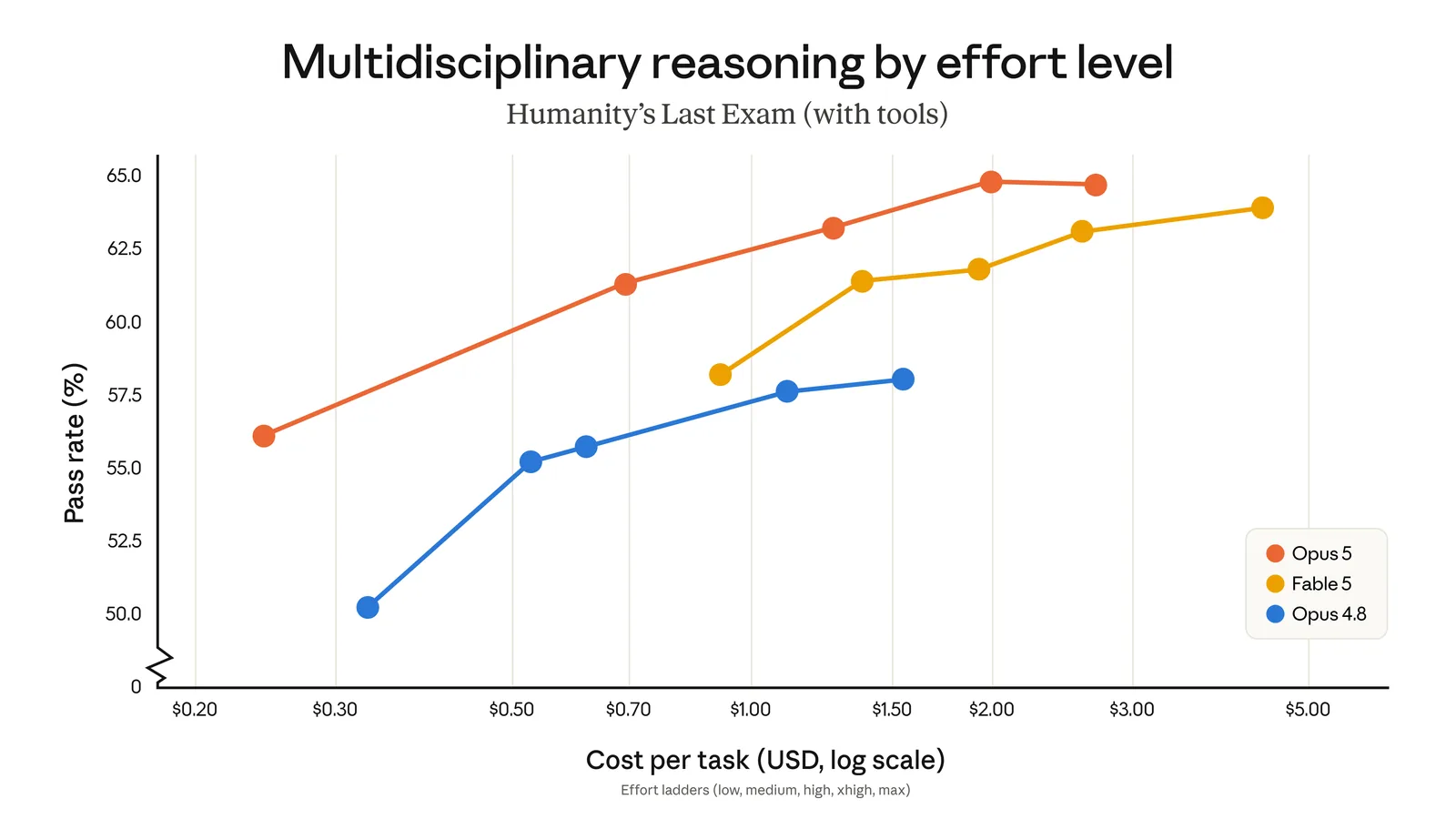
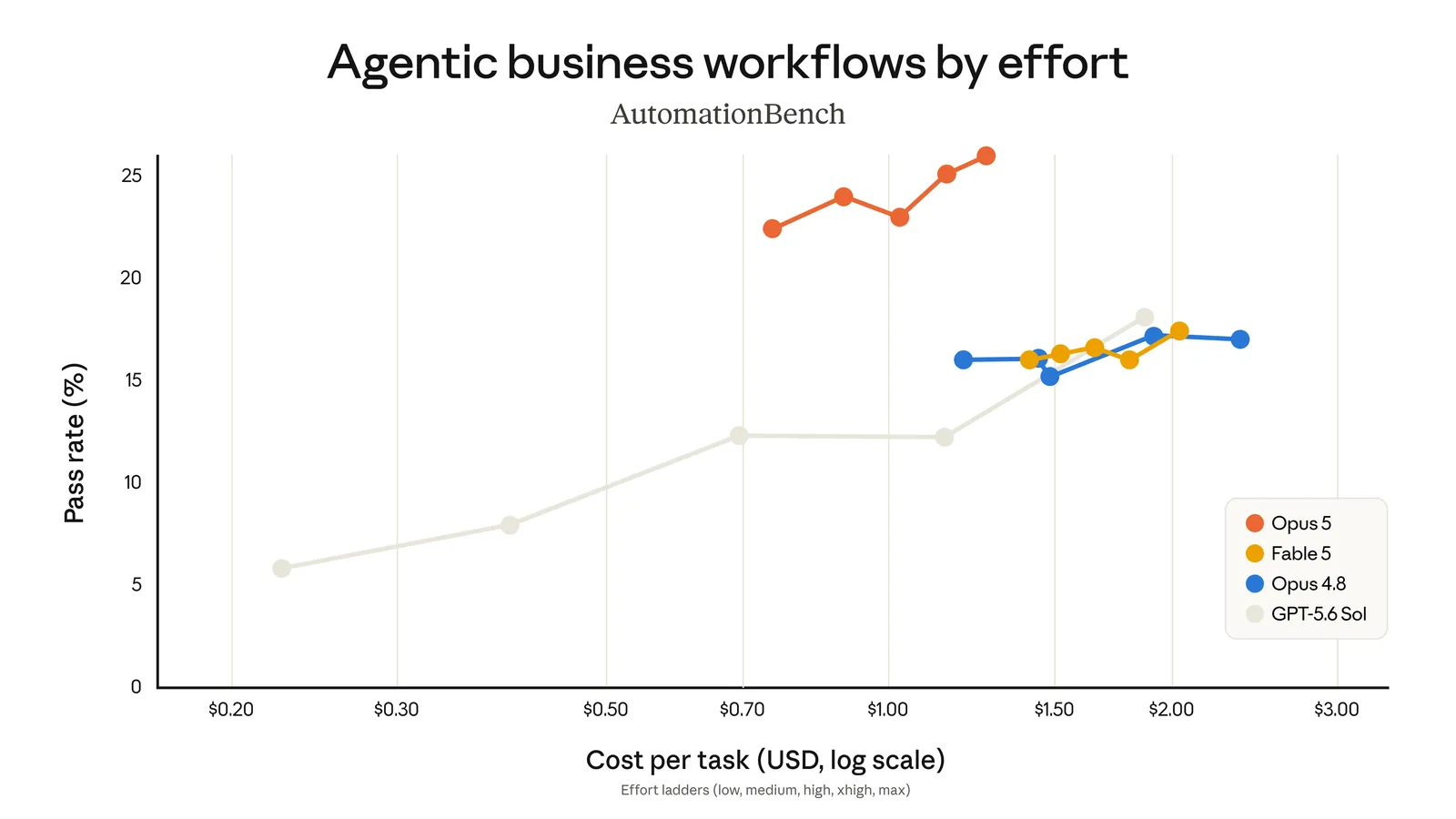
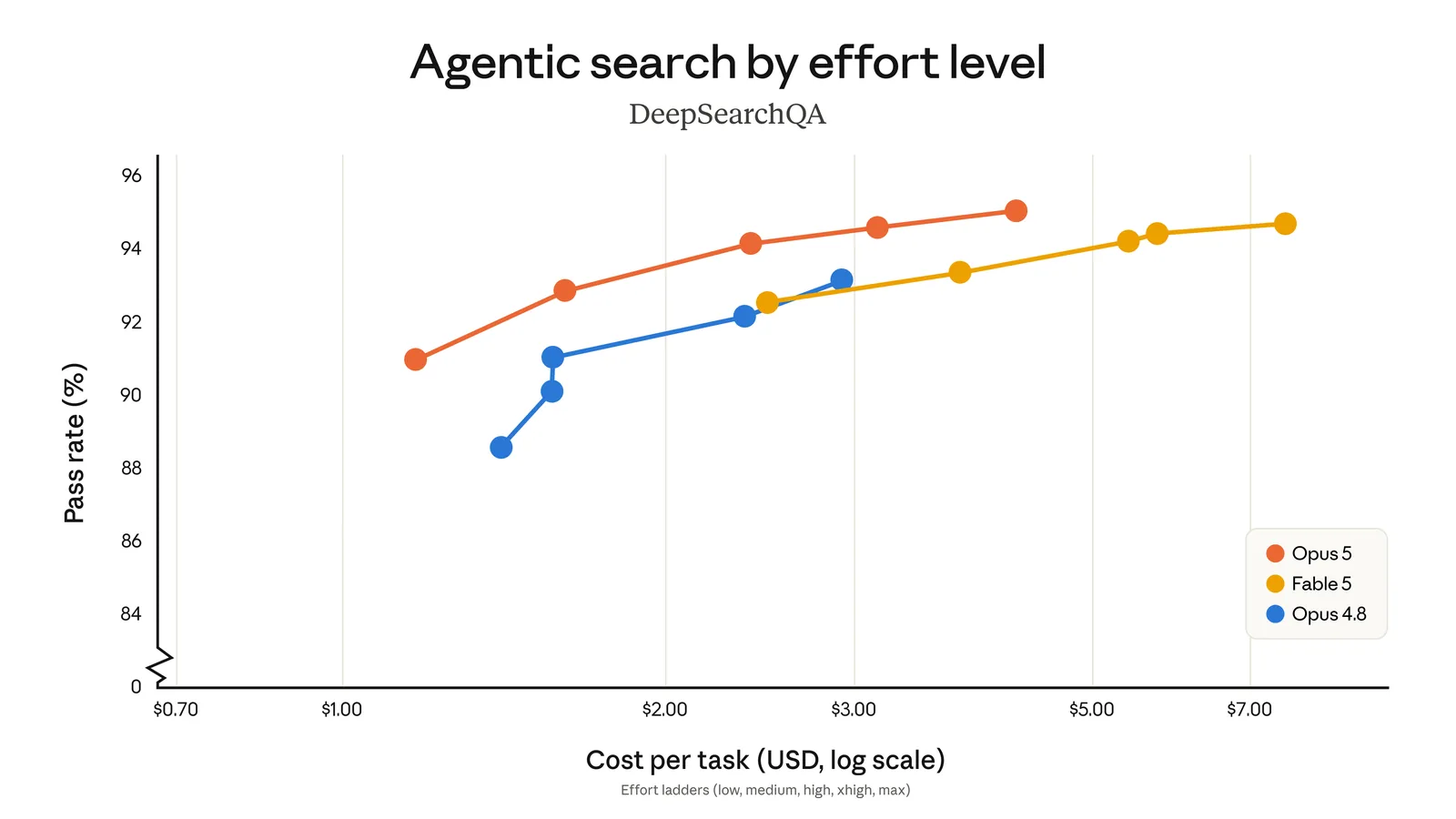
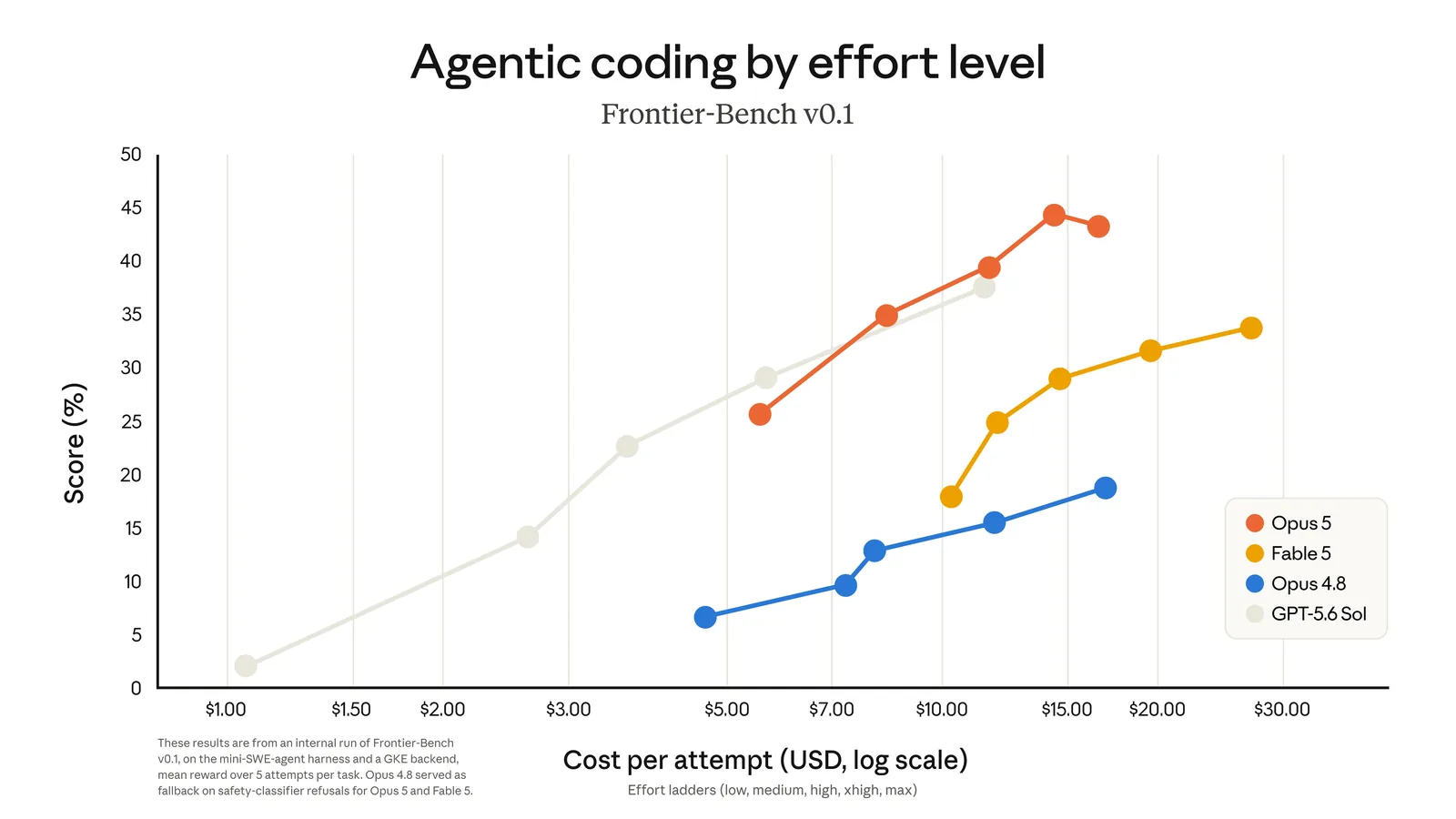
Charts from the Jul 24 announcement. Most plots compare score (up = better) against cost (left = cheaper). Dots are “effort” settings: low → medium → high → xhigh → max — spend more compute for more intelligence.
Scorecard
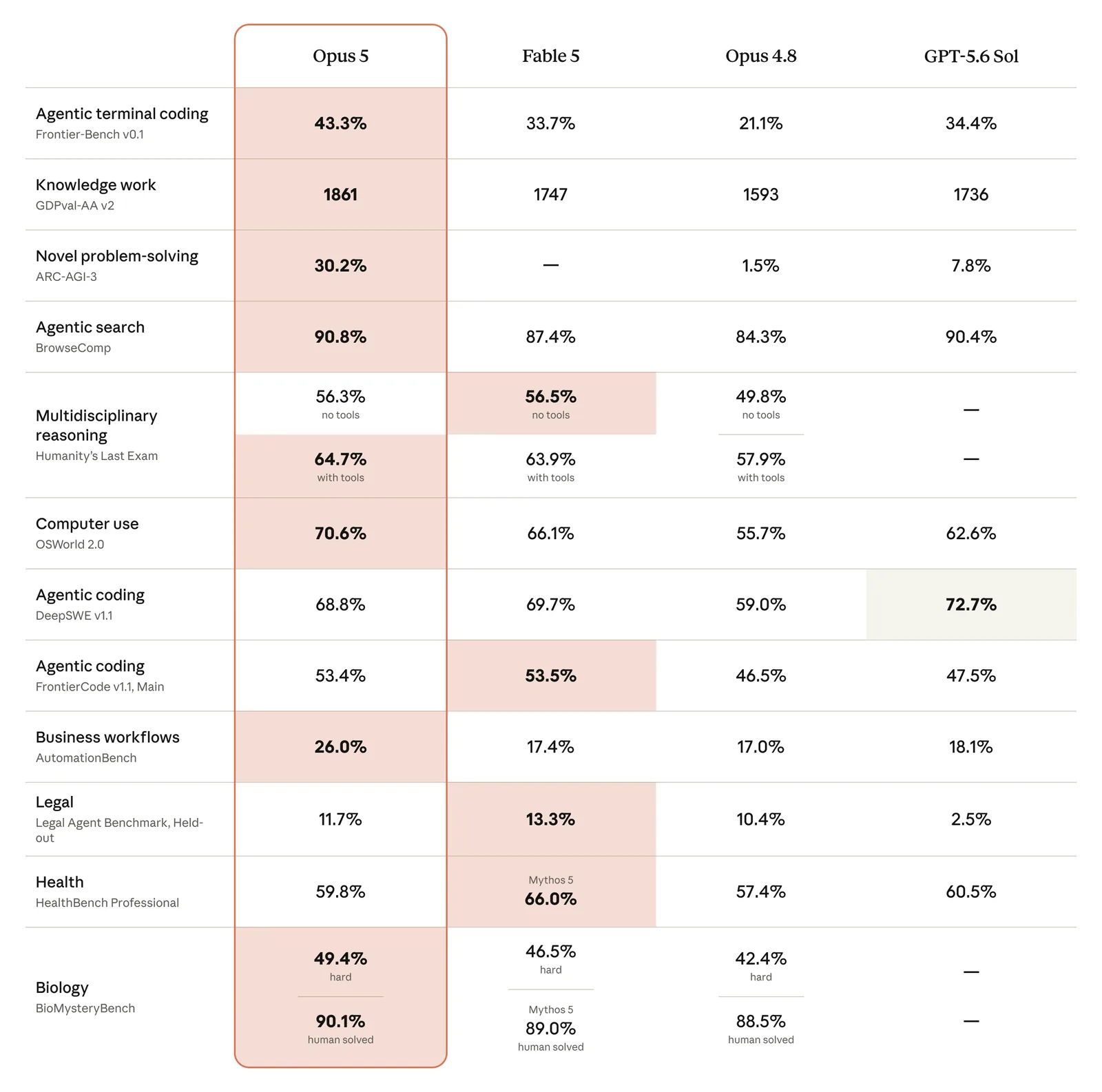
One snapshot table from Anthropic. Read the highlighted Opus 5 column first — peach cells elsewhere mean another model won that row. Peach band on Opus 5 = “look here.”
Source © Anthropic · Introducing Claude Opus 5
If your work is “agent writes and fixes real code,” this is the headline win: more than 2× Opus 4.8 on Frontier-Bench, still cheaper per successful attempt.
You don’t always need the absolute top model. On CursorBench, Opus 5 is within 0.5% of Fable 5 at max effort — at about half the cost per task.
ARC-AGI rewards inventing solutions, not recalling homework. Opus 5’s ~3× gap over the next model is why Anthropic calls out reasoning so hard in the post.
Zapier’s bench asks: did the whole business workflow finish? Opus 5 passes ~1.5× as often as the runner-up for the same spend — useful if you care about agents that finish jobs, not just chat.
Pricing
MTok = million tokens (roughly a large pile of words/code the API reads or writes). $5 / $25 means $5 to send a million input tokens and $25 for a million output tokens — identical to Opus 4.8, so switching models doesn’t change the rate card. Anthropic’s pitch: Fable-like quality at about half Fable’s cost. Fast mode (~2.5× speed) costs 2× those rates if you need lower latency.
Claude Opus 5
Input $5 / MTok
Output $25 / MTok
Same as Opus 4.8. Model id: claude-opus-5
Claude Opus 4.8
Input $5 / MTok
Output $25 / MTok
Same list price — Opus 5 is the upgrade.
Claude Fable 5
Relative Opus 5 ≈ ½ Fable price
CursorBench Opus within 0.5%
Near-Fable intelligence at half the cost per Anthropic.
Alignment
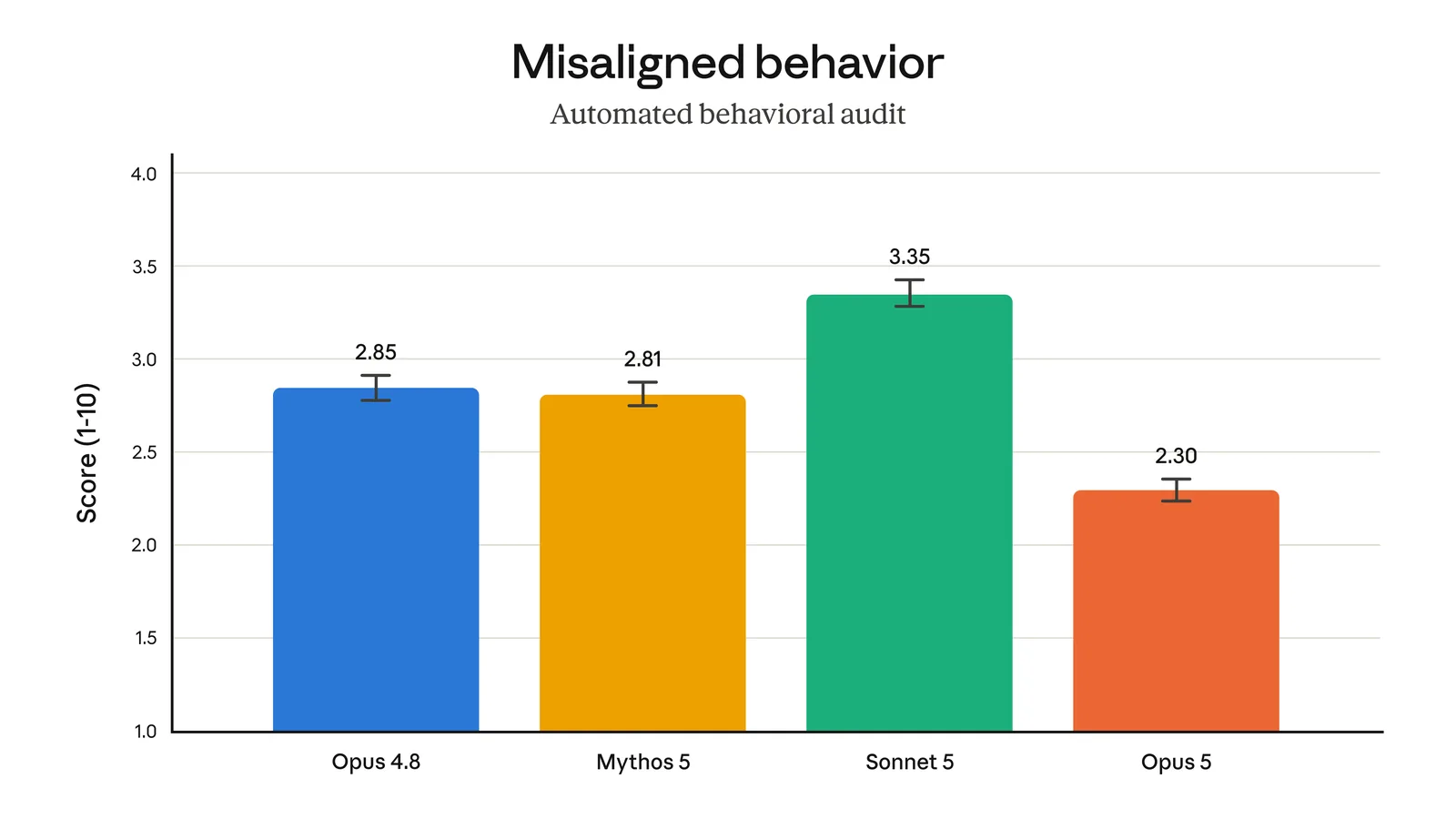
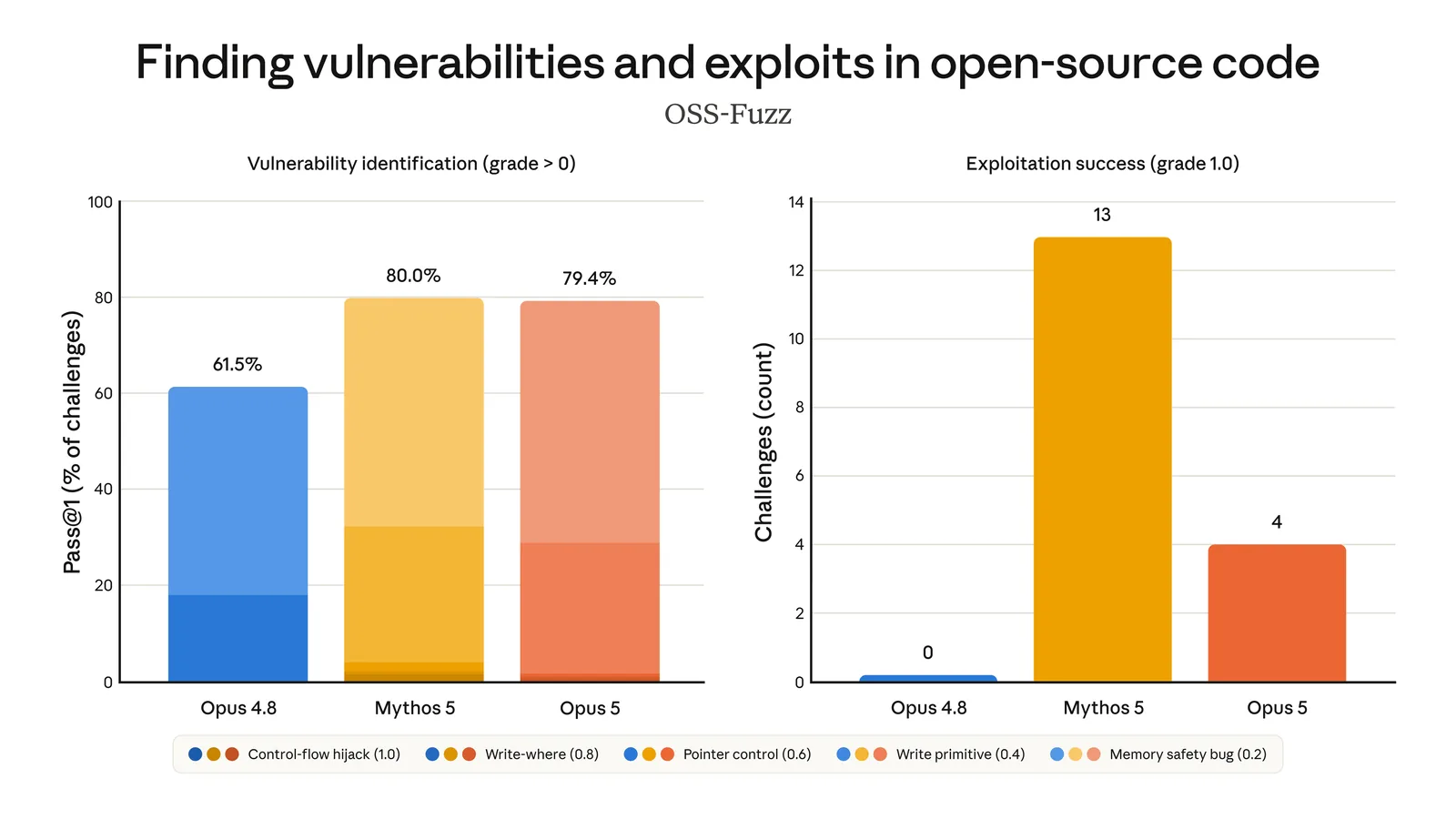
Lower is better on the misalignment chart (score 2.3 for Opus 5). In practice: fewer deceptive or reckless behaviors in Anthropic’s audit than Opus 4.8, Sonnet 5, or Fable 5. On cybersecurity (OSS-Fuzz), it can find software bugs nearly as well as Mythos 5, but is much worse at turning them into working exploits — by design, Anthropic kept exploit skill lower.
FAQ
It’s live today. On Claude Max, it’s already the default — just chat or open Claude Code. On Claude Pro, pick Opus 5 as the strongest model in the picker. Developers set the API model id to claude-opus-5. Need answers faster? Turn on Fast mode (~2.5× speed) at twice the token price.
Same sticker price as Opus 4.8 ($5 / $25 per million tokens), but much stronger: coding benches roughly double 4.8, it checks its own work more carefully, handles longer agent jobs better, and leads knowledge-work (GDPval-AA). Anthropic also says it’s their most aligned generally available Claude so far.
Default to Opus 5 for daily coding and knowledge work — near-Fable quality at about half the cost (CursorBench within 0.5% of Fable). Choose Fable 5 only when you need the absolute peak of the Claude stack and price is secondary. Full compare guide: claudeopus5.top/compare/en
Effort (low → max) is how hard you let the model think — more tokens and tool use for harder problems. Each chart usually plots those steps as dots: slide right/up as effort rises. Opus 5 often wins because it gets strong scores without needing the most expensive effort rung.
Every benchmark image is from Anthropic’s post Introducing Claude Opus 5. This site is an independent plain-language summary — not affiliated with Anthropic.